

Comprehensive Connectivity
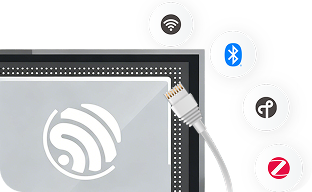
ESP32-S31 integrates both wireless and wired connectivity for versatile networking. It supports 2.4 GHz Wi-Fi 6 (802.11ax) for enhanced transmission efficiency and reduced power consumption, making it ideal for battery-powered and always-connected devices. IEEE 802.15.4 enables Thread and Zigbee protocols, and Bluetooth® 5.4 (LE) supports LE Audio for high-quality, low-power audio streaming, Direction Finding, and Bluetooth Mesh 1.1 for scalable many-to-many device communication. While Bluetooth Classic (BR/EDR) ensures compatibility with legacy audio devices and low-latency HMI applications. Also, the 1000 Mbps Ethernet MAC provides stable, high-bandwidth wired connectivity for IoT applications.
System and Memory
ESP32-S31 is a dual-core 32-bit RISC-V microcontroller running at 320 MHz with MMU support providing 6.86 CoreMark/MHz processing performance and 60 GPIOs for design flexibility. One core features a wide 128-bit data path with SIMD instructions, enabling fast parallel processing. The SoC provides 512 KB SRAM and 250 MHz 8-bit DDR PSRAM connectivity with simultaneous flash and PSRAM access. Multiple dedicated SPI interfaces, compatible with high-speed Octal SPI mode, enable flexible external memory expansion.
Advanced HMI Support
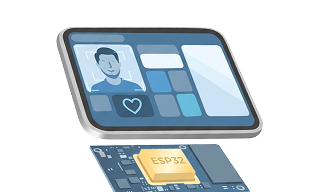
ESP32-S31 provides comprehensive human-machine interface capabilities for rich multimedia applications. It features a DVP camera interface (8 to 16-bit) and versatile LCD support (8 to 24-bit parallel RGB, I8080, MOTO6800), supporting conversion between RGB565, YUV422, YUV420, and YUV411. Dedicated hardware accelerators including JPEG codec, PPA, and 2D-DMA enable efficient image processing and display updates. Combined with up to 14 capacitive touch sensing channels, the ESP32-S31 is ideal for smart displays, video doorbells, multimedia panels, and applications requiring seamless touch, visual, and audio integration.
Flexible Audio Integration
The ESP32-S31 delivers versatile audio capabilities across wireless and wired interfaces. Bluetooth 5.4 LE Audio enables high-quality, low-power streaming with LC3 codec and multi-stream audio, while Bluetooth Classic (BR/EDR) ensures compatibility with headphones, speakers, and automotive systems. Dual I2S controllers with hardware-level Bluetooth audio synchronization provide precise timing and minimal latency, eliminating software-based synchronization complexity.
Security
ESP32-S31 provides robust hardware-based security for applications with stringent industry requirements. A standout highlight is the integration of TRNG and RAM-based PUF capabilities, providing a strong foundation for key generation and device security. It also supports secure boot, flash and PSRAM encryption, and cryptographic accelerators including AES-128/256, RSA, ECDSA, and ECC. In addition, an ECDSA-based digital signature peripheral protects private keys from software access, while TEE and APM enable software isolation for secure multi-application deployment.
Software Availability
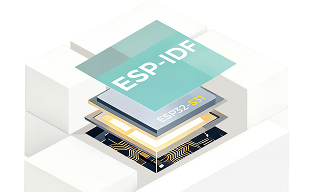
ESP32-S31 will be supported through Espressif's open-source IoT Development Framework ESP-IDF、ESP-Matter (for Matter devices), ESP-BLE-AUDIO and ESP-GMF (for multimedia applications). ESP32-S31 will also work with the ESP Private Agents platform as well as directly with common LLMs to build client devices that run or interact with AI agents to create voice-enabled and intelligent applications.